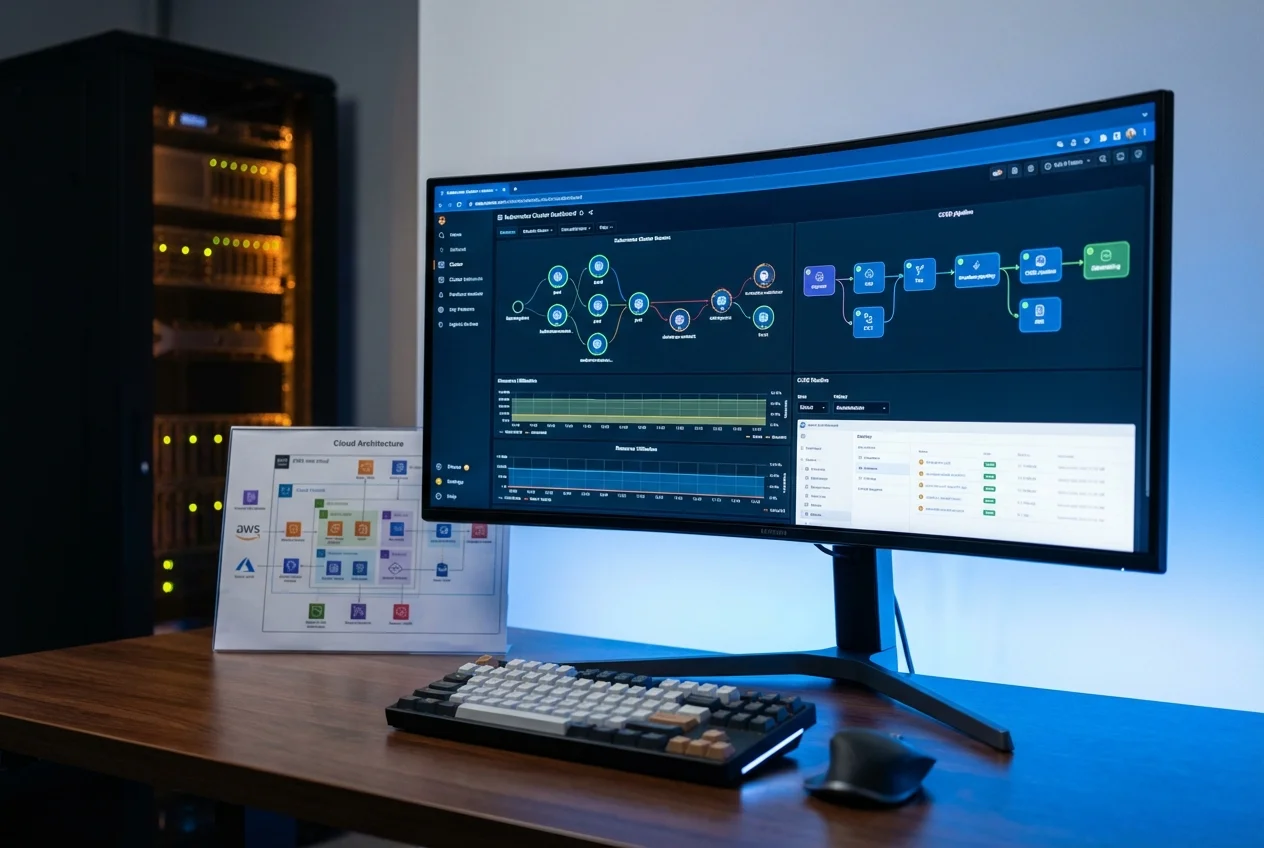

Cloud Development
Cloud-Native Development: Benefits for UK Businesses
·12 min read
Cloud migration is not a single project — it is a series of decisions about which workloads to move, how to move them, and what the target architecture should look like. Get the strategy wrong and you end up with a more expensive version of your on-premise setup running in someone else's data centre. Get it right and you gain the scalability, reliability, and operational flexibility that cloud platforms are designed to provide. The difference between the two outcomes is almost entirely in the planning.
We help businesses move from on-premise infrastructure to cloud — whether that means a straightforward lift-and-shift to get off ageing hardware quickly, a re-architecture to take advantage of cloud-native services, or a hybrid approach where some workloads move and others stay. We also help businesses that are already in the cloud but paying too much — optimising costs, improving observability, and implementing the infrastructure automation they skipped during the initial migration.
Every migration starts with an honest assessment of what you have, what it costs, and what the realistic options are.
A completed cloud migration with your workloads running reliably in the cloud, properly monitored, and with costs under control.
End-of-life hardware: Your on-premise servers are approaching end-of-life and the capital expenditure for replacement is significant. A lift-and-shift migration gets your workloads off ageing hardware quickly, converting CapEx to OpEx, with cloud-native optimisation planned as a follow-up phase.
Cost optimisation for existing cloud: You migrated to cloud two years ago but costs have grown faster than expected. Nobody has reviewed instance sizes since the initial setup, you are running dev environments 24/7, and your storage costs are climbing because nothing gets archived. We conduct a systematic cost review and implement the changes that typically save 25-40%.
Hybrid cloud strategy: Some workloads cannot move to public cloud — regulatory requirements, latency constraints, or data sovereignty obligations keep them on-premise. We design hybrid architectures with secure connectivity between on-premise and cloud, consistent identity management, and monitoring that spans both environments.
We have migrated businesses from on-premise Windows Server environments, Linux-based hosting, co-located infrastructure, and managed hosting providers to AWS, Azure, and GCP. We understand that migration decisions are as much about business context as technology — the hardware refresh cycle, the IT team's cloud expertise, the compliance requirements, and the tolerance for operational disruption all shape the right approach. We provide honest advice about what to migrate, how to migrate it, and what it will realistically cost — because surprises during a migration are the most expensive kind.
Planning a cloud migration or looking to optimise your existing cloud costs? Book a free consultation to discuss your situation.

 End-to-End Custom Solutions
 Business Process Web Apps
 API Modernisation
 Hybrid Mobile Solutions
 Technology Debt Reduction
 Full-Stack Figma Implementation