Mobile App Development UK: PWA vs Native (2026 Guide)
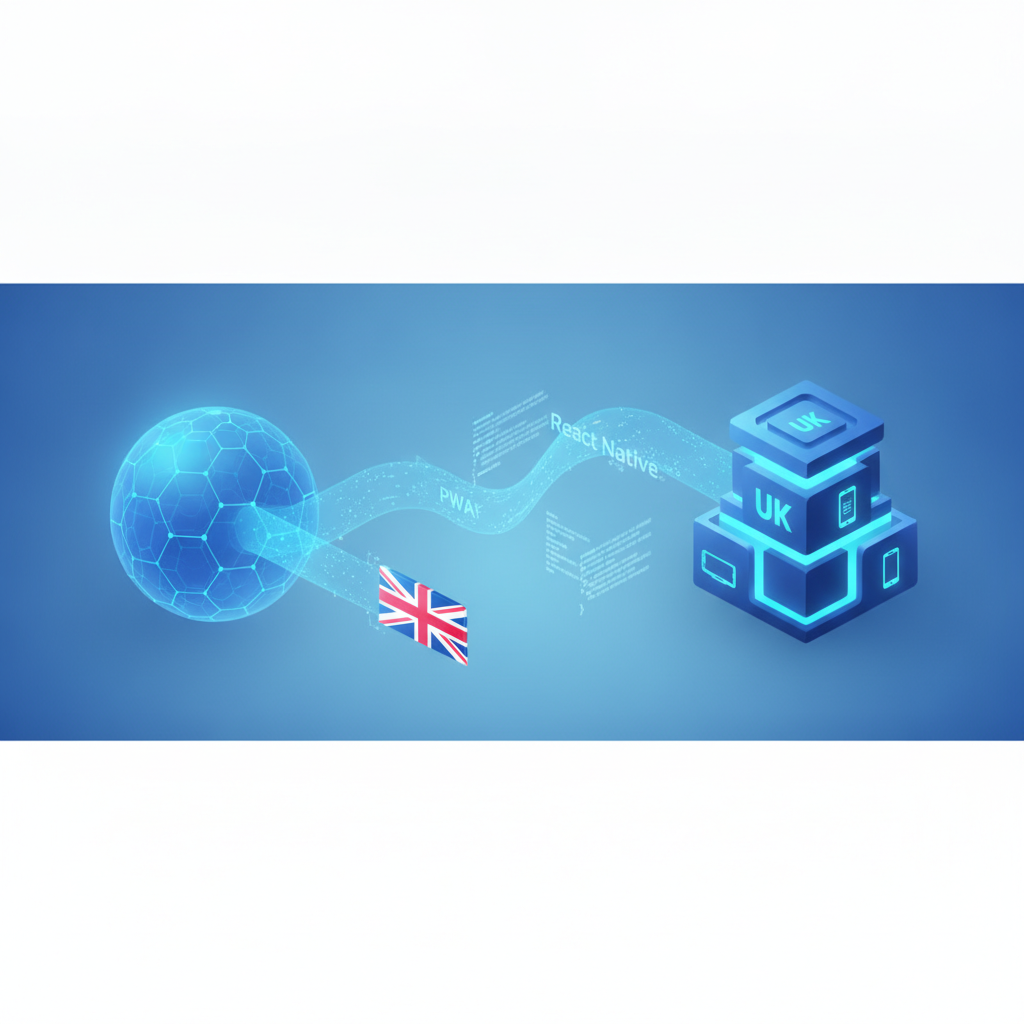
Why "PWA or Native?" Is the Wrong First Question
Most UK businesses starting mobile app development ask "should we build a PWA or a native app?" before answering a more fundamental question: do we actually know yet what our mobile users need? Committing to native development before validating mobile demand is the single most expensive mistake we see in mobile app development engagements — teams spend £40,000-£80,000+ on an iOS and Android build, only to discover usage patterns that would have completely changed the feature set had they known earlier.
A phased approach — start with a Progressive Web App, validate real usage, then migrate to native only where the data justifies it — de-risks that investment without slowing down time-to-market. It is the approach we default to unless a business already has clear evidence that native-only capabilities (deep camera integration, background location, offline-first with complex sync) are a day-one requirement.
What a Progressive Web App Actually Gives You
A PWA is a web application that behaves like a native app: installable to the home screen, capable of offline caching via service workers, and able to send push notifications on supporting platforms. For most B2B use cases — customer portals, internal tools, field-service apps with intermittent connectivity — a PWA delivers 80-90% of the perceived "app experience" at a fraction of native development cost, because it shares a single codebase with your existing web application rather than requiring separate iOS and Android builds.
The build cost difference is substantial. A PWA extension of an existing web application typically runs £8,000-£20,000. An equivalent native app built from scratch for iOS and Android typically runs £35,000-£90,000, because you are building and maintaining two platform-specific codebases instead of extending one. Our mobile app development service covers both paths and the phased migration between them.
Where a PWA falls short
PWAs cannot access every native platform capability — deep biometric integration, certain background processing modes, and some hardware-specific APIs remain native-only, particularly on iOS where Apple restricts service worker and push notification capabilities more heavily than Android. If your product genuinely needs these from day one, a PWA is a detour, not a starting point.
When Native Development Is the Right Starting Point
Skip the PWA phase and build native directly when: your app depends on capabilities a PWA cannot reliably deliver (continuous background location, complex offline-first data sync, deep hardware integration); you already have validated demand and usage data from an existing mobile presence; or app store distribution and discoverability is itself part of your go-to-market strategy, not just a delivery mechanism. React Native lets you share a meaningful proportion of business logic between iOS and Android — and, with the right architecture, with your existing web application — which narrows the cost gap with a PWA-first approach without sacrificing native capability.
The Phased Migration Path: PWA to Native
For UK businesses that are not yet certain mobile demand justifies a full native build, the lowest-risk path is sequential:
- Ship a PWA extension of your existing web app — typically four to six weeks, sharing your existing authentication, API layer, and business logic.
- Instrument mobile-specific analytics from day one — session frequency, feature usage, and drop-off points that a desktop-only analytics setup will not surface.
- Review usage data after 60-90 days against a clear threshold — active mobile users, session frequency, and specific feature requests that only native can satisfy.
- Migrate to React Native only where the data justifies it — reusing shared business logic built during the PWA phase rather than starting the mobile build from zero.
This sequencing means the PWA phase is never wasted effort even if you do migrate to native later — the API layer, business logic, and user research carry forward directly into the native build. Read our scalable software architecture guide for how to structure that shared logic so it survives the migration.
Frequently Asked Questions
Can we share code between our web application and a React Native mobile app?
Yes. Business logic, API clients, validation rules, and state management can typically be shared between a web application and React Native, provided the original web app was not built with tight coupling to browser-only APIs. This is one of the strongest cost arguments for React Native over fully separate native iOS and Android codebases.
How much does a PWA cost compared to a React Native app?
A PWA extension of an existing web application typically costs a third to a half of an equivalent React Native build, because it extends a single existing codebase rather than requiring new platform-specific development for iOS and Android.
What happens if we start with a PWA and later decide we need native?
The research, API design, and shared business logic built during the PWA phase carry forward into the native build — you are not starting over, you are extending validated architecture into a new client.
Not sure whether your UK business needs a PWA, a native app, or a phased path between them? Book a free mobile strategy review and we will assess your existing web application and recommend the lowest-risk starting point.
 End-to-End Custom Solutions
 Business Process Web Apps
 API Modernisation