Choosing the Right Software Development Solution for Your Business: A 2026 Guide

The Decision That Shapes Everything
Before a single line of code is written, before a vendor is selected, before a project timeline is drawn up, the most consequential decision a business makes about its technology is this: what kind of software development solution do we actually need?
Get it right, and you invest in technology that fits your operations, scales with your growth, and gives you a competitive advantage. Get it wrong, and you spend months implementing a system that does too much, too little, or requires so many workarounds that it creates more problems than it solves.
This guide provides a practical framework for evaluating your software development solution options in 2026, accounting for the real costs, risks, and trade-offs of each approach.
The Four Software Development Solution Types
Most businesses choose between four broad approaches, and many combine elements of more than one:
1. Custom Software Development
Custom software is built specifically for your business, from the ground up, to match your exact processes and requirements. Nothing is pre-built — every feature reflects a deliberate decision about what your business actually needs.
Best for: Businesses with processes that cannot be served by existing products, competitive advantage that depends on proprietary technology, or scale that makes per-seat SaaS licensing uneconomical.
Cost range: From 30,000 to 500,000+ GBP depending on complexity, with lower ongoing costs once built.
Timeline: 3 to 18 months to production, depending on scope.
2. Off-the-Shelf SaaS
SaaS products are ready to deploy, continuously updated, and priced on a subscription basis. For common business functions like CRM, HR, accounting, and project management, there are usually several mature options to choose from.
Best for: Standard business processes where your needs align well with what the market provides, and where the subscription cost is justified by the functionality.
Cost range: 50 to 500+ GBP per user per month, adding up quickly at scale.
Timeline: Days to weeks for basic implementation, months for complex configurations.
3. Platform Customisation
Some businesses choose a flexible platform such as Salesforce, Microsoft Dynamics, HubSpot, or Shopify, and build custom functionality on top. This gives them the infrastructure and integrations of an established platform with the flexibility to extend it for specific needs.
Best for: Businesses whose needs are mostly covered by an existing platform but require significant customisation. Common in sales, marketing, and e-commerce.
Cost range: Platform licensing plus 20,000 to 150,000 GBP for customisation work.
Timeline: 2 to 6 months for meaningful customisation projects.
4. Software Integration
Rather than replacing existing systems, software integration connects them, enabling data to flow between your CRM, ERP, accounting system, and operational tools without manual re-entry. This is often the highest-ROI software development solution for businesses with established systems that work individually but not together.
Best for: Businesses with multiple functional systems that create data silos and manual reconciliation work. Almost every business with more than three software tools in use.
Cost range: 10,000 to 80,000 GBP for a meaningful integration project.
Timeline: 6 to 16 weeks depending on the number and complexity of systems involved.
The Decision Framework: Five Questions That Guide the Right Choice
Question 1: Is This Process Truly Unique?
The single most important question in evaluating software development solutions is whether the process you are trying to support is genuinely differentiated. If your logistics workflow, pricing model, or client management process is fundamentally different from industry norms and that difference is a competitive advantage, then custom software may be the only way to support it properly. If your process is broadly similar to what competitors do, there is likely a mature software development solution already built for it.
Question 2: What Is the Total Cost of Ownership Over Three Years?
Upfront cost is rarely the right metric. A modest SaaS subscription looks cheap compared to a custom build until you do the three-year maths. At 5,000 GBP per month (not unusual for enterprise SaaS), the three-year cost is 180,000 GBP. A custom build at 50,000 GBP with 10,000 GBP per year in maintenance costs 80,000 GBP over the same period and owns its infrastructure rather than renting it.
Total cost of ownership should include: licensing fees, implementation costs, internal resource time, training, customisation, integration work, and ongoing maintenance. Calculate all of these for a minimum three-year horizon before comparing options.
Question 3: How Much Will Your Requirements Evolve?
Software development solutions differ significantly in their flexibility for change. Custom software can be changed in any direction. SaaS products evolve on the vendor's roadmap, not yours. Platform customisations can be extended within the platform's limits. If your requirements are likely to shift significantly over the next two years, prioritise flexibility over initial cost efficiency.
Question 4: Where Is the Data, and Who Controls It?
Data ownership and portability are underappreciated factors. With custom software, you own your data completely and can query, export, and migrate it freely. With SaaS, your data lives in the vendor's infrastructure, which matters when the vendor raises prices, gets acquired, changes their API, or goes out of business. For businesses in regulated industries or businesses where data is a core asset, data control should be a primary criterion.
Question 5: What Is the Integration Landscape?
No software development solution exists in isolation. Whatever you build or buy will need to connect with your other systems. Evaluate not just the primary software development solution but the integration work it will require. A cheaper standalone product that needs significant integration investment may cost more overall than a more expensive product with mature native integrations.
Common Mistakes in Software Development Solution Selection
Optimising for Features Rather Than Fit
Enterprise software products compete on feature lists. A sophisticated vendor demo can make you believe you need capabilities your business will never use, while obscuring the fact that the product's core workflow does not match how your team actually operates. Evaluate software development solutions against your actual processes, not against a theoretical maximum of what you might someday need.
Underestimating the Integration Requirement
The most expensive hidden cost in software development solution implementation is the software integration work that nobody budgeted for. Every system you add creates new integration requirements. Before selecting any software development solution, map your complete integration landscape and get realistic estimates for the connection work required.
Choosing Custom Development When an Integration Suffices
Businesses sometimes commission expensive custom software development when the real problem is that their existing systems do not talk to each other. Before assuming you need something new, assess whether a software integration project could solve the problem by connecting what you already have. Integration is almost always faster and cheaper than new development, and it preserves the investment you have already made in existing systems.
Ignoring the Implementation Partner
The quality of your software development solutions company matters as much as the technical choice itself. A capable software development solutions company will challenge your assumptions, identify hidden requirements, recommend the approach that is genuinely best for your situation, and deliver something that works in practice rather than just in a presentation. Evaluate the team as carefully as the technology.
When to Bring in an External Software Development Solutions Company
Some businesses have internal development resource that can evaluate and build software development solutions independently. Most do not, or their internal team is fully occupied with existing commitments and does not have the bandwidth to properly assess options, conduct a procurement process, and manage implementation.
An external software development solutions company brings:
- Experience across dozens of similar decisions, knowing what works and what does not
- Vendor-neutral advice not tied to any platform's commercial incentives
- Technical depth for evaluating build vs buy vs integrate trade-offs honestly
- Implementation capability across all four solution types
- Accountability for delivery, not just recommendations
The 2026 Landscape: What Has Changed
Several developments in 2026 have shifted the software development solutions calculus for UK businesses:
- AI-assisted development: Custom software development timelines have compressed by 30-50% for many project types due to AI-assisted coding. Projects that would have taken six months in 2023 can often be delivered in three to four months today, making custom development more accessible for smaller businesses.
- Integration tooling maturity: The software integration landscape has matured significantly. Tools like Make, n8n, and enterprise integration platforms have reduced the cost and complexity of connecting systems, making integration a viable solution for many problems that previously required custom development.
- SaaS consolidation: Several major SaaS categories have consolidated around two or three dominant players, reducing the evaluation burden but also reducing negotiating leverage. Price increases from established SaaS vendors have made the custom vs buy calculation look very different than it did three years ago.
- AI agents as a category: A new category of software development solution has emerged: AI agent systems that can handle semi-structured processes autonomously. For businesses with high-volume, judgement-intensive workflows, AI agents represent an option that did not meaningfully exist before 2024.
Getting to the Right Decision
The right software development solution for your business is the one that solves your actual problem, at a cost your business can sustain, delivered by a team you can trust. There is no universal answer, only the right answer for your specific situation.
If you are evaluating software development solution options and want an independent assessment, including honest advice about whether you need custom development, integration, platform customisation, or something off-the-shelf, book a free solution architecture review. We will analyse your requirements and your existing systems, then give you a clear recommendation with realistic cost and timeline estimates across all viable options.
 End-to-End Custom Solutions
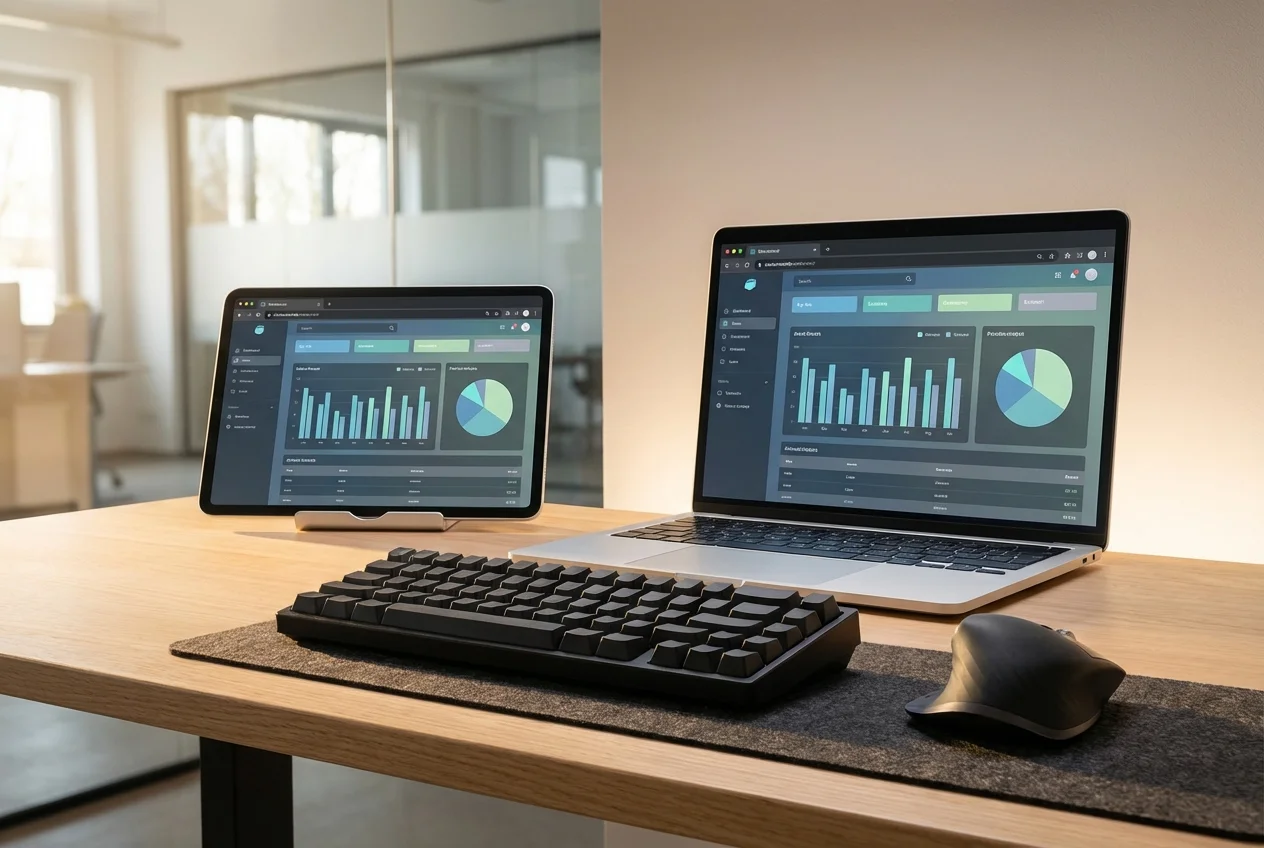 Business Process Web Apps
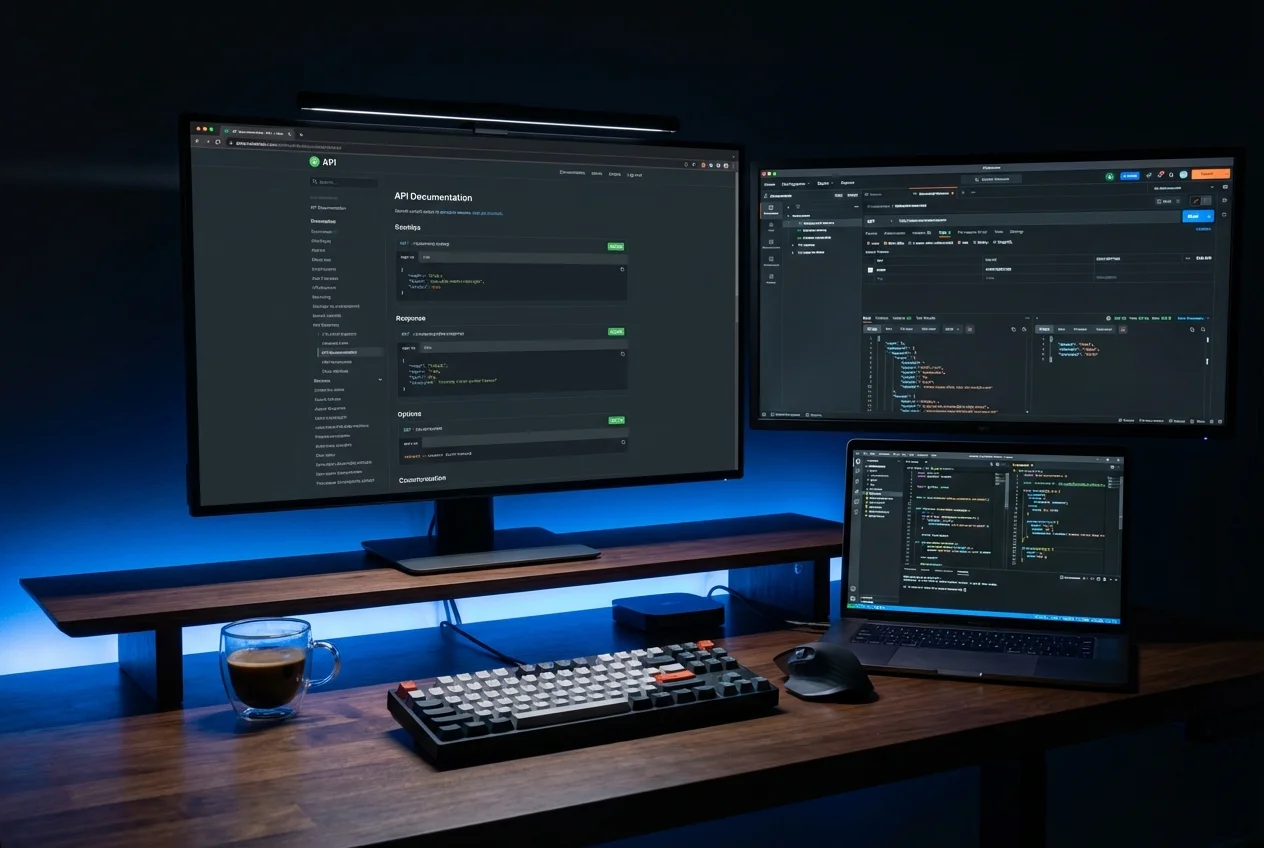 API Modernisation